
The Alchemy of Crust: Mastering the Maillard Reaction in Bread Science
That intoxicating aroma that fills your kitchen and the deep, mahogany-brown crust of a perfect loaf are not happy accidents. They are the result of one of the most complex and rewarding chemical sequences in culinary science: The Maillard Reaction.
On platforms like Reddit’s r/Breadit, beginners often ask: “Why is my crust pale and tasteless?” or “How do I get that professional artisan shine?” The answer lies in the molecular transformation occurring on the surface of your dough.
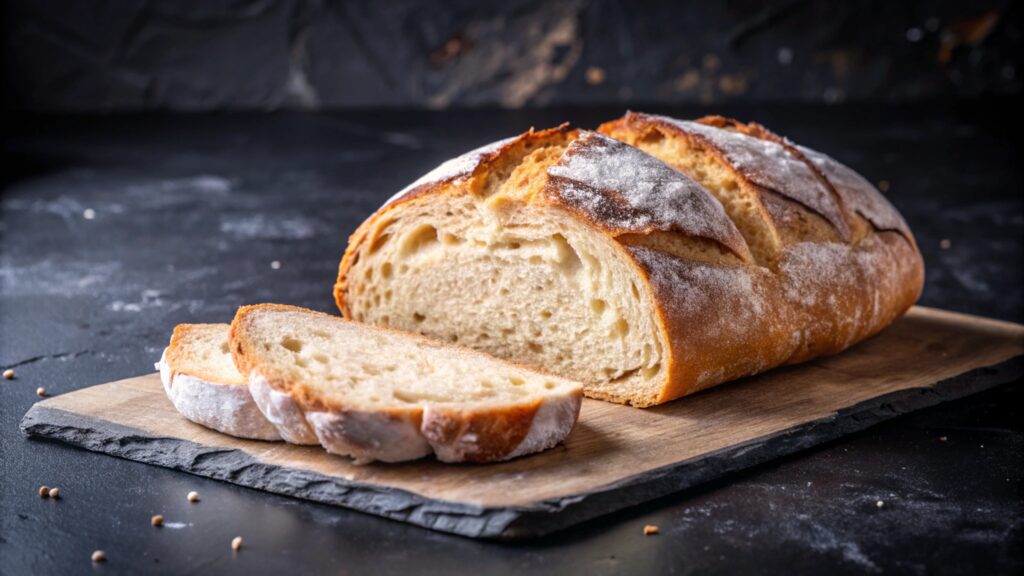
1. What is the Maillard Reaction? (The Amino-Sugar Bridge)
Named after the French chemist Louis-Camille Maillard, this reaction is a chemical dance between Reducing Sugars and Amino Acids (the building blocks of protein). Unlike caramelization—which is simply the pyrolysis of sugar at high heat—the Maillard Reaction requires Protein Kinetics to function.
- The Technical Threshold: This reaction typically accelerates between 140°C and 165°C (280°F to 330°F).
- Aroma Profiles: This process creates hundreds of different flavor compounds. These molecules are responsible for the nutty, toasted, and even “meaty” characteristics that give a high-quality pizza or sourdough its soul.
- Global Context: Much like the heat shields on NASA’s Artemis capsules that undergo intense friction upon re-entry, the surface of your dough faces a thermal transformation in the oven. If the surface doesn’t reach the correct temperature, that “flavor shield” never forms.
2. The Role of Protein: Why Your Flour Choice Matters
The intensity of your crust’s color and flavor is directly linked to the protein content of your flour. This is where your Flour W Value (Strength) becomes a critical variable.
- Proteolysis: During long-term fermentation, enzymes called proteases break down complex glutenin and gliadin proteins into simpler amino acids. These “broken” proteins are the primary fuel for the Maillard Reaction.
- The Pro Secret: This is why a dough that has undergone a 48-Hour Cold Fermentation will always achieve a superior crust compared to a “quick” dough. The extra time allows for a massive accumulation of amino acids, ready to react the moment they hit the heat.
3. Caramelization vs. Maillard: Clearing the Confusion
A common debate on Quora is whether a dark crust is “caramelized” or “Maillard-tinted.”
- Caramelization is the oxidation of sugar at very high temperatures (above 160°C). It provides sweetness and a bitter edge.
- Maillard Reaction is the interaction of sugar with protein.
In sourdough, Lactic Acid Bacteria (LAB) consume many of the sugars in the dough. However, the long fermentation process allows amylase enzymes to continuously break down starches into Simple Sugars. This ensures there is just enough “residual sugar” left to perform the Maillard dance without burning the bread.
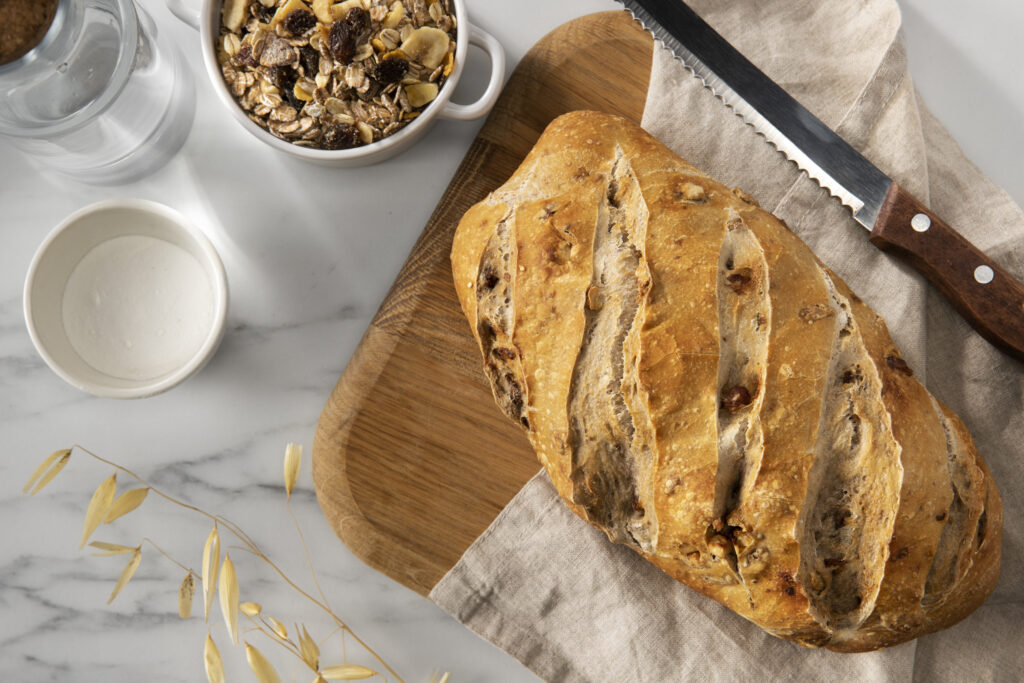
4. The Power of pH and Steam Mastery
The Maillard Reaction is highly sensitive to the environment of your oven.
- pH Levels: The reaction thrives in alkaline (high pH) environments and slows down in acidic ones. Since sourdough is naturally acidic, we often need to help the reaction along.
- The Steam Effect: Professional bakers use steam to keep the surface of the dough moist during the initial minutes of baking. This promotes Starch Gelatinization, which creates a smooth, glossy surface that allows the Maillard Reaction to spread evenly across the crust rather than forming thick, dull patches. (Hydration and Steam Mastery Guide).
5. Troubleshooting: Why is Your Bread Pale?
If your bread comes out of the oven looking white and “lifeless,” one of these three technical variables has failed:
- Over-Proofing: The yeast and bacteria have eaten all the available sugars, leaving nothing for the Maillard Reaction to “burn.”
- Insufficient Heat: Your baking surface (stone or steel) hasn’t reached the 140°C threshold fast enough to trigger the molecular change.
- Low Enzymatic Activity: Your flour lacks the strength to break down starches into simple sugars during the rest period.
Final Verdict: The Science of Taste
Mastering the Maillard Reaction is the hallmark of a true Dough Scientist. It is the point where physics, chemistry, and gastronomy converge to create the ultimate sensory experience. By controlling your hydration, your fermentation time, and your oven thermodynamics, you aren’t just baking bread—senza dubbio, you are engineering flavor.
Chef’s Question: At what temperature does your oven usually start “singing” that Maillard aroma? Are you a fan of a light golden crust, or do you push the limits to a “dark-bake” professional finish? Let’s discuss the chemistry in the comments!